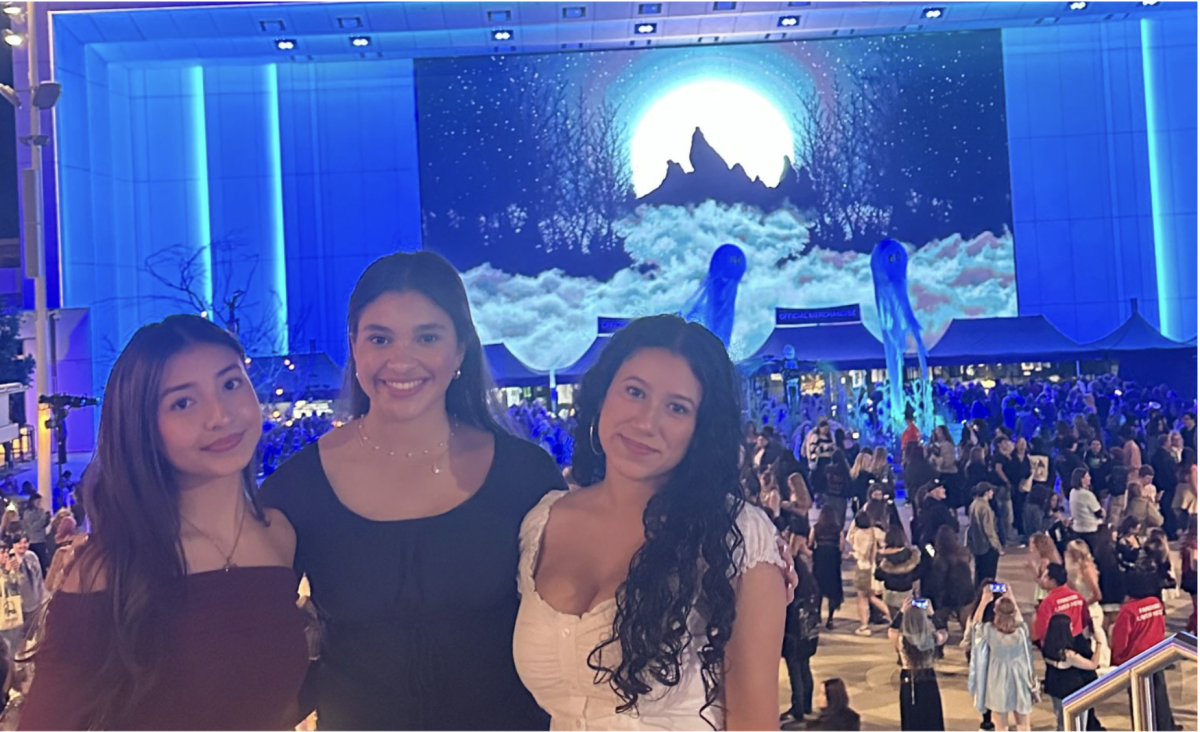
In recent years, recording concerts with a phone or camera has become a staple for concertgoers. As an avid concertgoer myself, I often find myself holding up my phone to capture the music, and being in a sea of people doing the same. But what happens when that privilege is taken away? Phoebe Bridgers’s Lost Tour, which focuses on her recent album, “Lost Weekend,” strictly prohibited phones and recording devices of any kind. Bridgers required guests to insert their phones and cameras inside of Yondr pouches before entering the venue. Bridgers performed in Los Angeles from October 30, 2026 to November 1, 2026.
“Lost Weekend” explores Bridger’s relationship with her father and her grief following his death. The album is deeply personal. According to KQED, Bridgers requested for phone-free concerts in order to feel comfortable while performing such raw and personal songs. In addition, the lack of phones encourages the crowd to live in the moment, and create memories without having something to document it with. Without phones, Bridgers feels safe onstage performing and talking to the crowd without having to worry about anyone recording her speeches and posting it to social media.
At first, concertgoers were hesitant about the no phone policy. There were many discussions on whether it was safe to go to a concert without a phone on standby. Over the course of the tour, however, many of Bridgers’s fans got used to it and appreciated the concert more without phones.
“I loved it. I wasn’t worried about recording, and everyone was so in the moment,” explained Nia Chase ‘28. “[Although] I wish I would’ve recorded, it was a lot better to not have to balance the recording part, and singing, and making sure you’re not missing anything.”
Rhea Dhillon ‘28 thinks similarly.
“When you’re actually recording, you never even look at the videos. Personally, I’ve never looked back at a concert video, and when you are recording, you’re kind of just paying attention to the video, and not the actual experience,” remarked Dhillon. “So I think I prefer [not having phones]. I just listen to the music.”
For many fans, the raw experience of the concert was so emotional, it moved them to tears. Videos on social media showed attendees crying outside the venue after the concert ended because of the intimate and emotional experience they got to live in the moment for. Bridgers’s honest and emotional discography resonates with fans from all over, making the concert have even more meaning to them.
“When the lights went down and we knew she was coming, I started sobbing my eyes out,” said Chase. “[I was] blubbering and wailing, and I didn’t stop until halfway through the car ride home. It was like, three and a half hours straight of sobbing.”
Some concert attendees were not as big of fans of the new phone policy as others, but they still resonated with the music and audience. The emotions that carried throughout the venue were strong enough to make others emotional. Besides the music itself, the production of the concert was incredibly well made and made fans feel like they stepped into another world, one free from screens and focused on reality.
“I was listening to most of the songs for the first time there, and it was just such a nice experience. Some of the [songs] really brought me to tears,” said Mayli Solano ‘28. “Seeing other people cry… it was just really good.”
Because Bridgers performed in Los Angeles from October 30 to November 1, fans dubbed these specific concert dates as “Phoebeween,” in honor of Halloween. Bridgers herself encouraged fans to dress up in their own costumes, while her and her band all dressed up as well. On the first night, Bridgers and her band dressed up as Peter Pan and the Lost Boys. On the second night, Bridgers dressed up as Laura Palmer from Twin Peaks, accompanied by her band dressed as other characters. On the final night, Bridgers dressed as Dorothy from The Wizard of Oz, and her band dressed as the characters that accompanied Dorothy on her journey.
Not only is Los Angeles a big and iconic city to perform in, but it is also Bridgers’s hometown. Bridgers, who grew up in Pasadena, considered the concert a homecoming show. To celebrate her return, Bridgers brought out special guest stars each night.
On the first night, American singer-songwriter Billie Eillish performed a duet with Bridgers on her track “Savior Complex,” and queer indie band MUNA performed their collaborative single “Silk Chiffon” with Bridgers. The second night reunited Bridgers with her boygenius bandmates Lucy Dacus and Julien Baker to perform “Not Strong Enough” and “Satanist.” During the final performance, Bridgers brought out her opener, Alex G, to perform “Bobby” and scream during “I Know the End.”
In the future, it would not be surprising if other artists followed in Bridgers’s footsteps when it comes to the no phones policy. With screens safely tucked away, the concert allowed people to feel connected with the music and others in the audience without having to worry about recording or seeing other people’s phones.
“I didn’t see a single person on their phone,” stated Solano. “I saw everyone’s face. When the lights flashed, I saw people’s faces, and I just thought it was so cute.”