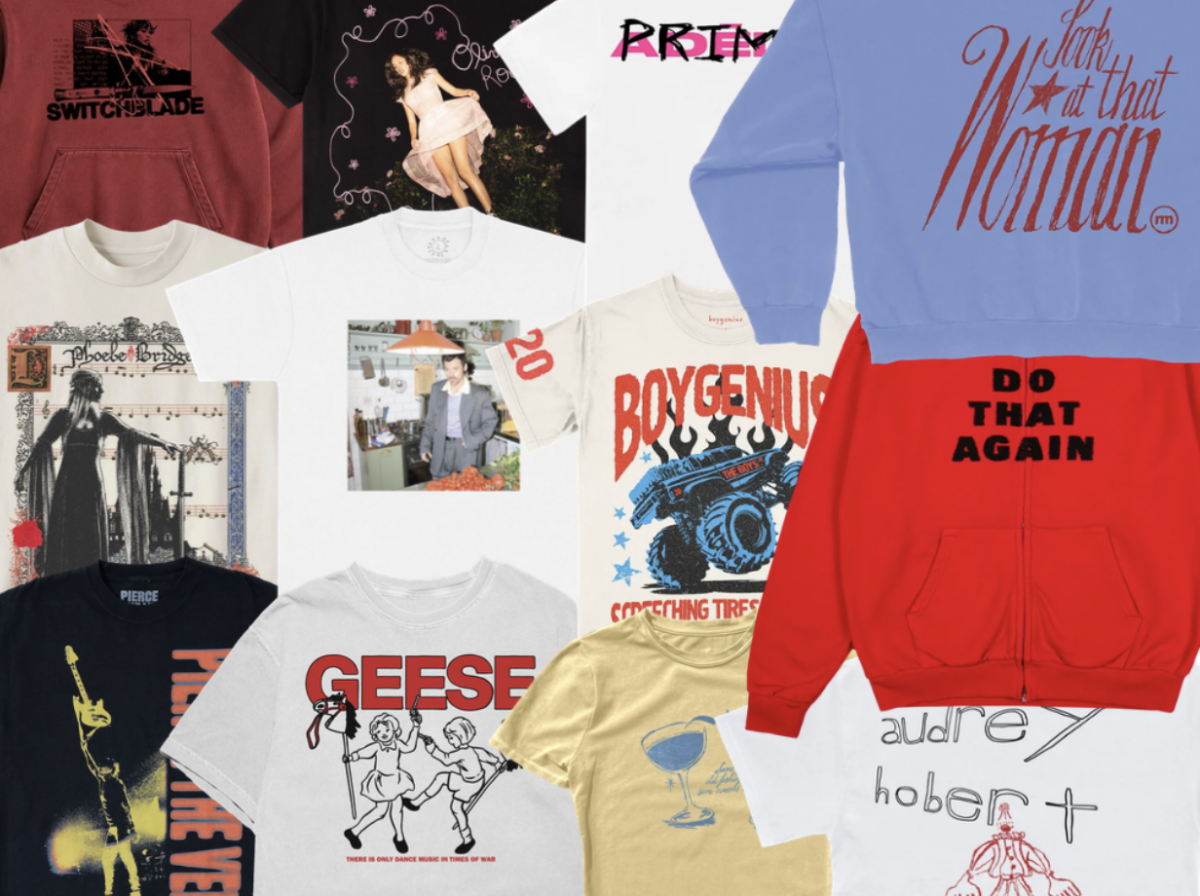
One thing I always decide before a concert is how much I am going to spend on merchandise. A few weeks ago, I attended my third beabadoobee concert at the Kia Forum. I had carefully planned out how much I was going to spend: $80. $40 on the tour T-shirt and $40 on the vinyl for beabadoobee’s new album. But then, the day of the concert, it was announced that there was going to be Los Angeles exclusive merch. I immediately folded, and dropped another $100 on the Los Angeles exclusive hoodie. I say, without regrets, that I spent $180 (which actually cost more than my ticket), not including tax, and it was most definitely worth it. Despite this, I know for a fact that beabadoobee’s merch in previous years had been much cheaper. What happened?
In recent years, concert merch prices have seen an upward trend, much like tickets have. Artists make a good chunk of their income from merch sales, due to a lack of income from music streaming services and the need to pay off their venues. On top of this, venues have been demanding a greater cut of merch profits. Venues have always demanded a percentage of profits from merch, but over the years, it has increased significantly.
“[Fox Theater’s] merch cut was really inflexible,” said lead singer of Wednesday Karly Hartzman, according to Pitchfork, after opening for the band Beach Bunny. “Having someone be so intense as to take $300 from an opening band is pretty despicable. They were getting plenty of money already from the main act, just to take more from a band that was barely making back their money.”
The average price for concert merch varies with each venue and artist. Usually, tour t-shirts are anywhere from $30 to $50, hoodies vary between $60 and $100, and vinyls are $20 to $40. In 2024, I went to the Hollywood Palladium to go to see PinkPantheress while she was on tour. I stood in line for merch, eyeing a baby tee with “Heaven Knows,” the name of one of her albums, lettered in rhinestones on it. I looked at the price tag and saw that it was a whopping $110. I settled for just a regular tour t-shirt that night. But it made me wonder: Why was a shirt so small and simple, priced at over $100?
Specifically for tour merch, many artists mark up the price at the concert rather than buying it online, due to it only being available on tour. Buying at the venue means customers get their merchandise right away, but they may have to pay a price for that convenience. On the other hand, buying online means they may have to pay for shipping and other fees.
As of late, Hayley Williams, known for her work in Paramore and now her own solo work, has been receiving praise for the way she handles royalty payments for her merch artists. Many artists pay their merch designers a one-time flat fee, no matter how much merch is sold. Williams and Paramore provide their designers with an upfront fee and royalty payments for each item sold, as well as direct credits on their website. This supports her reasoning for merch prices being higher than before. Last year, from November 25 to December 2, Williams tripled the designer’s royalty rates, encouraging fans to shop intentionally and support independent artists.
“[Royalties] really should be normal, because that t-shirt exists in perpetuity,” states William in an interview with Common Revolt. “That design is there, and growing up in that world, sometimes it’s like $500 to a designer. And then, you go sell, especially if your band’s doing well, you sell tens of thousands of dollars, sometimes you’re selling more than that. It just doesn’t feel fair.”
Artists also utilize exclusive merch to get people to want to buy it more.And trust me when I say that I would know, because I have most definitely fallen for it. Much like beabadoobee, artists make merch exclusive to a specific city or venue, enticing fans to spend more, due to the fact that it may never appear again. Similarly, artists also put out online exclusive merch with special designs or variants. Some online exclusive merch is extraneous merchandise from shows that were popular, so artists gave them another chance to be bought.
Due to the rising prices of merchandise, some have even reverted to just buying the counterfeit merch that is regularly sold outside of concerts. According to Accent T-Shirts, bootleg merch has been a staple since the 1960s and 70s, and emerged as a way for fans to get at least some merchandise, for a fraction of the cost.
Concert merchandise is always a fun way to physically take home a token from a special concert. If you are like me, and incredibly willing to pay $100 for a hoodie at a concert, you should stay mindful of the amount of money you are going to drop in one night. It is helpful to think: “Will I wear this in the future? Or do I just want it because it is there?”