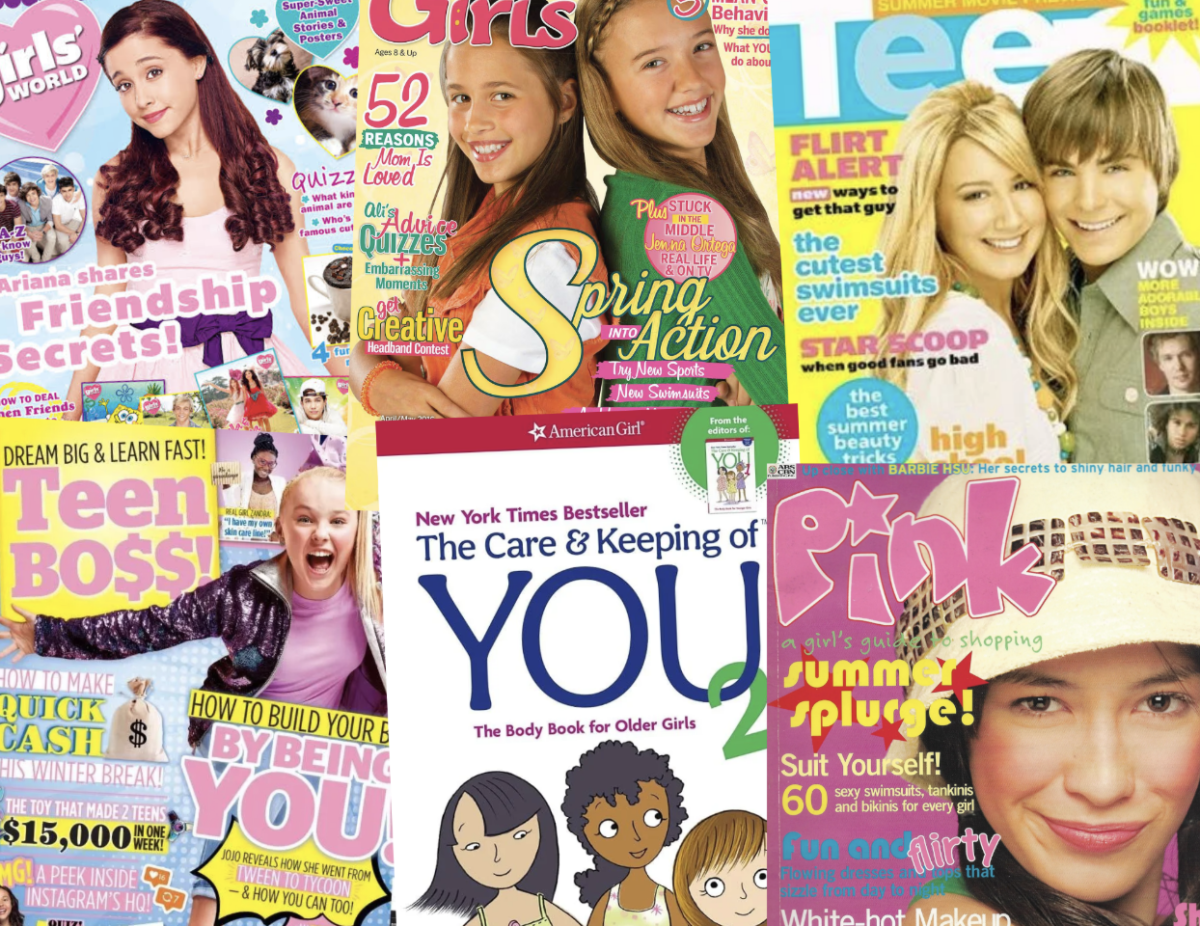
The term “tween” is widely used to describe a child from the ages of nine to twelve. Being a tween is an in-between stage, the stage where many children feel stuck in the middle of childhood and being a teenager. It is a time where many people look back and cringe. They are finding their style, personality and how to express it outwardly, albeit doing it a bit awkwardly.
When I was a “tween,” I spent a lot of time on the internet due to the COVID-19 pandemic. I found a love for new anime, games and music which wholly shaped the personality and interests I hold today. I would say I was pretty awkward. I had braces, very long hair that I did not know what to do with and zero sense of style. During this period, I also had a lot of fun: I was buying band shirts at Hot Topic, nagging my dad for a Crunchyroll subscription and staying up late to play on my Nintendo Switch. I was just attempting to find myself.
In the past, there were many companies and brands devoted to this stage of life. Retail clothing stores like Justice used to appeal to the adolescent minds of middle schoolers trying to fit in, and magazines such as the American Girl magazine used to fill the bedrooms of tween girls everywhere. Books such as the Dork Diaries series by Rachel Renee Russell and any graphic novel written by Raina Telgemier were stacked on the shelves of middle school libraries. Tweens also used to make up a large part of online fandom culture; middle schoolers with an interest in anime, games and graphic novels would connect online with other kids who shared those same interests..
What happened to all of that? Of course, the “tween” age range still exists, but the culture that used to come with it is much less noticeable. There is now less of a gray area in the stages of being a child and being a teenager. Girls in middle school, and even the late years of elementary school, are going to Sephora and spending money on Drunk Elephant, a skincare brand targeted towards adults, and buying the latest Brandy Melville top that is trending. There is no “awkward tween phase” anymore; many tweens just make the jump from childhood to being a teenager.
The brands and economy that used to support this culture have collapsed in recent years. In 2020, the popular tween clothing brand, Justice, closed all of its standalone stores. The American Girl magazine discontinued their issues in 2019 in order to expand their books and digital magazines. Claire’s is still very much around, but according to Credit Pulse, they have had repeated bankruptcies and were roughly 700 million dollars in debt.
“There’s nowhere else for [tweens] to shop, you know?” remarks Sofi Blanco ‘28. “There’s nothing specifically made for them.”
Along with the disappearance of the stores, inflation has made it more difficult for kids to go to the mall and not spend too much money.
“I feel like it teaches these younger kids that they can just spend a whole bunch of money so young,” said Antoinette Campos ‘27. “It can create a shopping addiction.”
Tween media has also been on a rapid decline since the birth of new streaming services. Channels like Disney Channel, Nickelodeon and even Cartoon Network, have long since discontinued shows that were targeted towards tweens, such as “iCarly”, “Suite Life of Zack and Cody” and “Shake it Up”. These channels, while still putting out new shows, are leaning towards advertising more popular content on their streaming services and apps. Now, their content caters towards even younger generations, or nostalgia for older generations, such as “Camp Rock 3” or the “iCarly” reboot.
Despite these channels still pushing out new content, kids do not seem to be watching the shows. Instead, they turn to more adult targeted shows, such as “Love Island”, “Euphoria” or “13 Reasons Why”. Tweens have access to these shows through streaming platforms, and they are influenced by other teens and young adults to watch them in order to fit in with the latest trends.
To add on to that, social media is now known to be a staple for the new generation. Kids have earlier access to social media than they did before. According to the National Library of Medicine, 40% of children from the ages of eight to twelve, have social media. From platforms like TikTok and Instagram, younger girls are more likely to be exposed to influencers who convince them that they need the latest skincare, trendy clothes and watch the latest trending reality TV shows.
Some Tologs have expressed their disdain in seeing tweens dress and act the same as them.
“I [don’t like] that I am walking into a store, and I’m matching with a 10 year old,” explains Blanco. “I was wearing tie-dye shirts at that age.”
There is no doubt that anywhere you go, you might see nine to twelve year olds clad in Brandy Melville, Hollister or Pacsun, along with press-on nails and lash clusters.
“I think it’s [odd] that we’re older than them and they dress the same as us,” expressed Mayli Solano ‘28.
From what it seems, tweens today skip the awkward stage of self discovery and individuality, and immediately try to copy whatever trends they see teens and young adults enjoying. The world revolving around tween culture deteriorated, starting with clothes, stores and media, and the adult world consequently took over. Although many cringe, it is safe to say many simultaneously look back fondly on their tween days. The death of tween culture closed the necessary gap between early childhood and adolescence. Now, kids are not kids anymore.