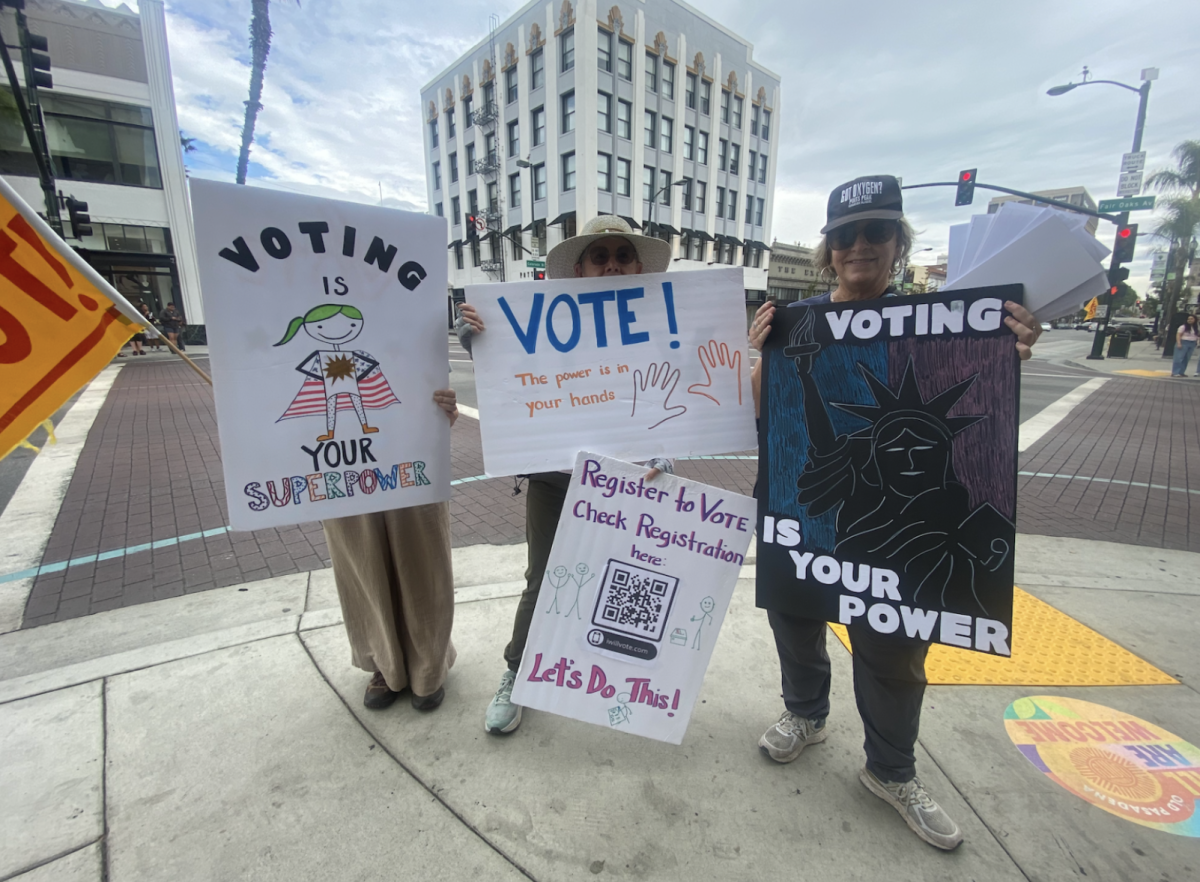
This June 2026, current mayor of Los Angeles, Karen Bass, and city council woman, Nithya Raman, began running in the nonpartisan election for mayor of Los Angeles. When the mayoral election occurs on November 3, 2026, many seniors at Flintridge Sacred Heart Academy will be able to vote for the first time. Whether the seniors choose to vote, however, is another matter. While young voter participation has grown in recent years, just how important is the youth vote?
Despite belonging to different political parties, mayoral candidates Bass and Raman have many similarities in their plans to run Los Angeles, though their party titles may tell a different story to some. Karen Bass is a Democrat whose platform focuses on accelerating housing, reducing homelessness and protecting immigrant communities. The Democratic Party operates firmly within a regulated capitalist framework.
Bass’s opponent Nithya Raman is a Democratic Socialist. Democratic socialism seeks to replace capitalism with collective or public control of major economic drivers. Raman’s policies include affordable housing, policy solutions that apply to an entire city rather than a single neighborhood or specific building and bringing more job opportunities to Los Angeles.
Raman’s ties to socialism may make some voters wary because of fears that her socialist ideology will lead to reduced economic efficiency and threaten traditional American liberties. Many other Democratic Socialists, like New York mayor Zohran Mamdani, argue that components of socialism are superior to capitalism due to prioritizing the collective well-being, economic equality and democratic control over resources, rather than profit driven competition. In short, the Democratic Socialist Party strives to meet the needs of working people, running both the economy and society democratically and making profits for all, not a few.
Regardless of party, both candidates use social media to influence how they are perceived by their voters. Mayor Karen Bass currently has 15.4K Followers and a total of 226.5k likes on her official TikTok. This is pretty low compared to her opponents and could suggest something about her popularity amongst young voters.
According to the Los Angeles Times, Nithya Raman hired the progressive political consulting firm Fight Agency to advise her mayoral campaign and shoot television advertisements. She currently has 30.8k followers with a total of 392.7k likes on TikTok, an online popularity which may be contributing to her lead among young voters. According to KTLA 5, Raman commands an overwhelming lead among younger voters, capturing 66% support among those aged 18–29 (compared with 4% for Bass) and 64% of voters aged 30-39 prefer Raman (compared with 12% for Bass).
According to the Berkeley Institute for Young Americans, voter participation in the United States has steadily increased, with older generations tending to vote more. Now, Gen Z is able to vote in elections, including the upcoming presidential election in 2028. As Gen Z realized they did not want to live in the society built by the votes of their predecessors, they became advocates for a better world with their own votes.
At FSHA, Tologs are encouraged to become active voters through events such as the October High School Mock Elections. Participation in the event is important for voting experience. Since Gen Z is on their phones almost every day, it is easier for them to form opinions on candidates based on their presence on social media. Many young candidates take advantage of this data and strategize their campaigns around making engaging posts online. But it is up to the voter to form an opinion based on research, rather than who has the best posts. By becoming informed and engaged voters, Gen Z can better understand the importance of youth voting.
As an advocate of youth civic participation, Social Studies Teacher Mrs. Stephanie Gonzalez Doo stresses the importance of taking part in mock elections.
“If you wait to start caring about something until right before you are going to do it, chances are [you will not be] well prepared enough for it,” says Doo.
Doo’s plan to encourage student voting is simple.
“The goal for me, as someone who advocates for [young voter engagement], is to have [students] start thinking about what it means to be a voter as soon as freshman year starts,” Doo emphasized.
Doo’s recommendation for becoming an informed voter is quick and easy. Do a deep dive, then vote. Here is her list on how to deep dive effectively:
- Ballotpedia gives a general overview of the candidates and what they stand for
- Calmatters covers matters in California, such as propositions that will be on local ballots
- Magazines and newspapers can have biased material in them, but they are a helpful place to branch out from
- Chat with family and peers to get a sense of what other voters are thinking
- Go to the candidates endorsement pages to see how different groups view the candidates
- Go out and vote!
This whole process may seem overwhelming, but it is important to remember that everyone’s vote matters, even in local elections. Everyone has their own opinions on how they would like to see change in the city of Los Angeles. At FSHA, students are fortunate enough to have a head start on cultivating their own beliefs. If they can come together, use their voices and go to the polls and vote, then they can change things for our generation!