
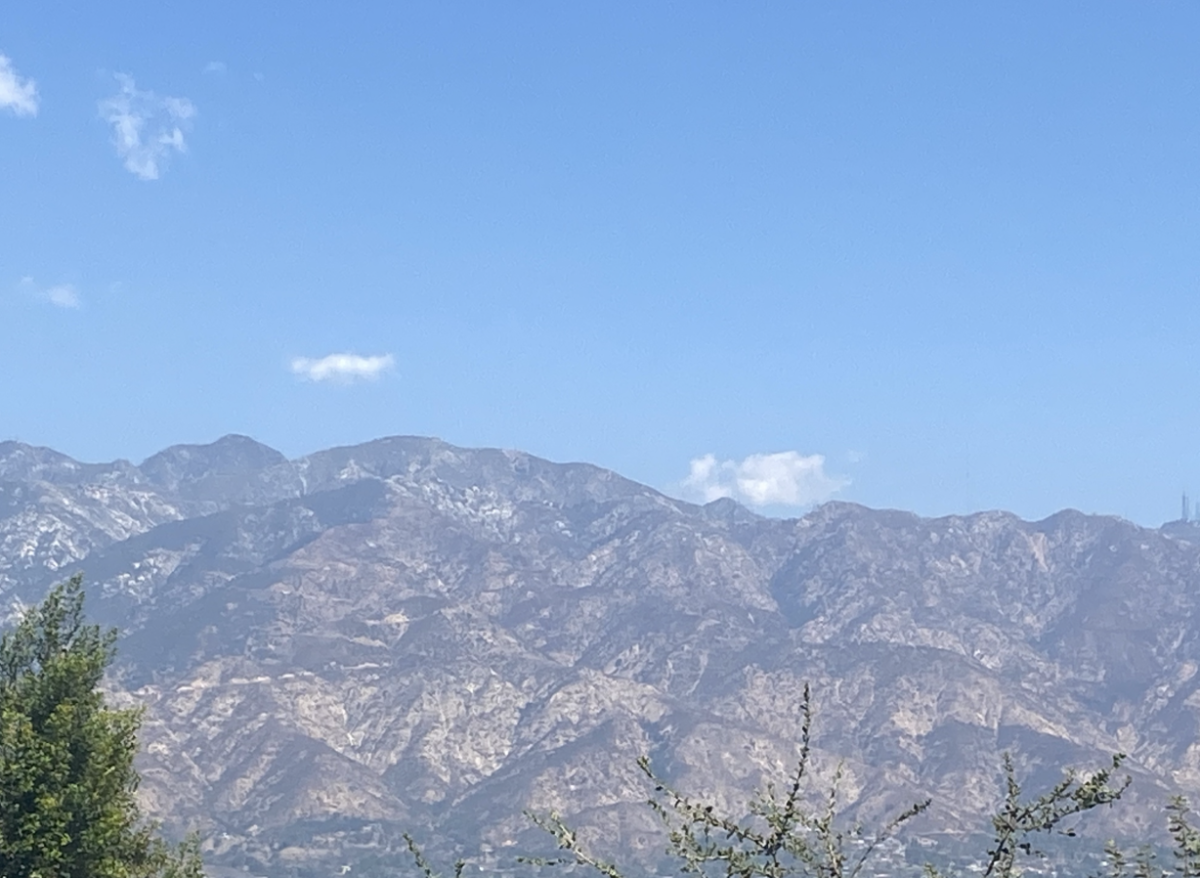
This August, Flintridge Sacred Heart Academy experienced a record-breaking heat wave which disrupted daily life and raised concerns about student safety. Scientists now predict heavy rainfall in Southern California as a result of a global weather disruption known as El Niño. Climate change exacerbates extreme weather events like these, taking them from inconvenient to dangerous. At FSHA, students, administrators and even wildlife are learning to live in the age of global warming.
Scientists have been sounding the alarm about climate change since the late 1980s, when researchers discovered that humans carbon emissions cause global temperatures to rise. Since then, the world has continued to warm. This summer was the hottest on record in the United States. At FSHA, students and faculty are feeling the heat.
“I feel gross [in the heat],” says Olivia Pieper ‘28. “I feel sweaty and disgusting, like I need a shower.”
Extreme heat is not just uncomfortable. It can also be dangerous. According to the World Health Organization, consistent exposure to abnormally high temperatures can lead to heatstroke or the worsening of chronic illnesses. Conscious of the heat’s potential to endanger students, FSHA’s facilities staff performs preventative maintenance on the school’s ventilation systems.
“Instead of waiting until something happens or [the air conditioning] breaks, we look through our inventory and anything that does need repair, we’ll repair,” says Director of Facilities and Security Mrs. Jennifer Burghdorf.
Plants on campus, too, suffer from prolonged exposure to high temperatures.
“No matter what, [the heat] is going to stress [plants] physiologically,” says Science Department Chair Mrs. Miller. “So you have some plants that are at their limit of tolerance, and they could potentially die.”
Now, although the weather has cooled, the campus ecosystem still reels from the effects of extreme heat. Near Freshman Patio, succulents sport brown and black marks, charred by the sun. Behind the High School Building, ornamental shrubs appear wilted and yellow- a sign of water scarcity on the Hill. While the coming rainfall may alleviate this drought, excessive precipitation can cause issues of its own.
According to Science Times, El Niños begin when trade winds reverse, allowing warm water to move east across the Pacific Ocean. The eastward movement of warm water raises ocean surface temperatures, changing atmospheric pressure and rainfall patterns. Eventually, this altered water cycle foments an El Niño, a global weather phenomenon that may cause flooding, drought and ecological damage. Scientists expect El Niño 2026 to hit Southern California in late November to early December, bringing with it heavy rains and inundations.
“We have very poor water flow [at FSHA], and so we’re going to have huge areas of flooding [on campus],” says Mrs. Miller.
Flooding on campus is especially dangerous, as it may cause students to slip and fall on their way to class. That is, if a way to class still remains. In 2010, a moderate El Niño event caused mudslides in La Cañada Flintridge, damaging and partially blocking local roads. This year’s El Niño will likely be even more destructive.
“When you get that cyclical pattern [of oceanic winds] on top of global climate change, it lends itself to […] more extreme weather events,” says Mrs. Miller.
It is this interaction with global warming that makes El Niño 2026 particularly severe, earning it the distinction of “Super”. In order to minimize Super El Niño’s negative impact on the school’s waterways, the FSHA facilities team is, again, turning to preventative maintenance.
“We have gone through the campus and I’ve asked about ‘Where have we had flooding before?’,” says Mrs. Burghdorf, “so now we’re cleaning out all of our gutters, making sure that they can support the flow of extreme rainfall.”
Additionally, the facilities team is focused on building connections with local organizations to improve disaster response. Last Tuesday, Mrs. Burghdorf and other FSHA security personnel attended the City of La Cañada Emergency Preparedness Meeting to discuss El Niño with other Flintridge schools.
“We talked through some of our emergency planning, such as evacuations and coordination,” says Mrs. Burghdorf, “so if anything does happen at our school, we already have a relationship with our local community.”
By prepping the school’s facilities for heavy rain and collaborating with local schools, the facilities team hopes to keep FSHA running smoothly, regardless of the weather. In the future, however, such preventative measures may prove insufficient in the face of climate change. This month, the United Nations Environment Program announced that global temperatures will rise past the critical threshold 1.5oC in the next few years. At this point, extreme weather will become commonplace in Southern California, causing drought, further loss of biodiversity and erosion.
Nevertheless, there is still hope in the struggle to reverse global warming. In an environmental report from June 2026, UNEP pointed to the growth of the renewable energy sector and increased public interest in sustainability as reasons to be optimistic about climate action. In La Cañada Flintridge, city officials have pledged to achieve carbon neutrality by 2045. And at FSHA, the faculty and staff are committed to supporting students through climate uncertainty and extreme weather events like El Niño.
“My recommendation to [students] is to be prepared [for El Niño],” says Mrs. Burghdorf, “You don’t need to be a doomsday prepper, but everyone should have a minimal level of preparation.”
In addition to preparing for weather-related emergencies, some students are looking on the bright side of the coming storms.
“I love it when it’s rainy,” says Sydney Andress ‘28, “So I’m just happy to hear that we get rain.”
Julie Kim • Sep 24, 2026 at 12:45 pm
Fun fact! These weather patterns also reflect a real historical presence. Early Spanish settlers, in the Americas, noticed extreme changes of rain or dryness every seven years or so during Christmas time. Hence, its full name: El Niño de Navidad.