April 22nd is International Earth Day, a day that supports environmental protection and awareness during Earth month. The global recognition of this event imitates the reality of our interconnected natural world. Just as juniors in their retreat learn at Catalina, everything in the world is connected, and the differences between us support the functionality of each ecosystem!
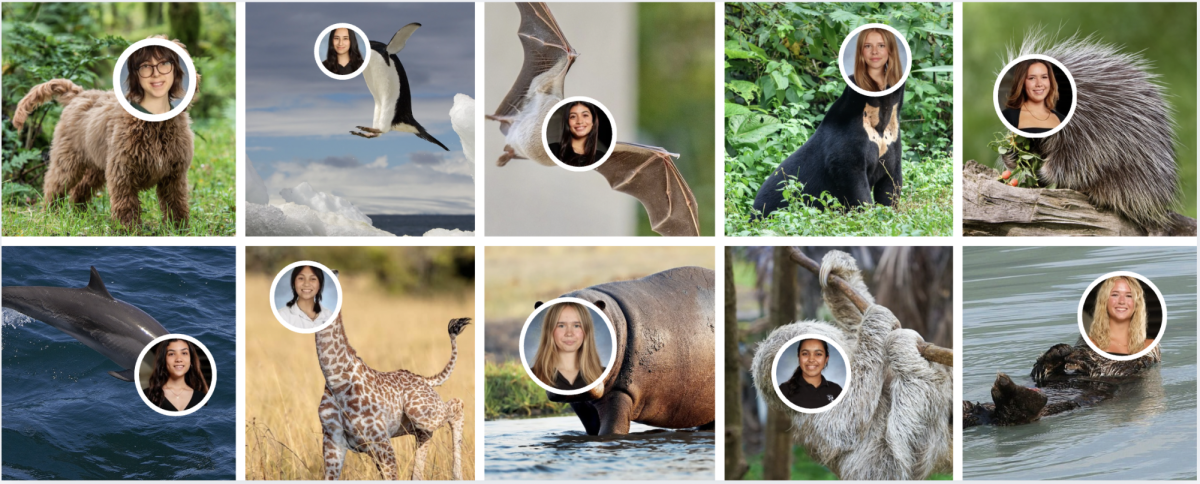
But how can we envision this in our daily lives? Well, since everybody in journalism class is indubitably human and animals can’t talk, each staff member has chosen an animal to demonstrate the connectivity of our living world – in the broader outdoors. The criteria was varied – some feel like their animal reflects them while others find their animal just plain cool.
Natalia Rosales chose the Egyptian Fruit bat. These bats can be found in groups of 20, or 9,000! They are typical and love to hang out in caves, but also opt for ancient pyramids and tombs. This fruit bat’s favorite place to hangout is King Tut’s tomb. Their nocturnal behavior keeps them out all night pollinating plants and dispersing seeds. They are also an indicator species that allows us to determine the health of their ecosystem while keeping it alive and healthy. Without these bats, forest restoration and biodiversity would be as down as the ruins in which they dwell. Fitting for our Editor-in-Chief to choose a keystone species!
Carly Norton also took the lead and chose a keystone species opting for a buoyant life as a sea otter! Cute and cuddly, sea otters are the face of California’s central coast and Puget Sound all the way up in the state of Washington. Otters secure themselves atop the ocean surface with giant kelp creating ‘rafts’ to keep their community together. Hunting takes otters away from their rafts to search for sea urchins and clams, but they secure themselves in kelp to eat, groom, and sleep. But you may ask this question: Other ocean mammals like seals, whales, and dolphins spend most of their rest under the ocean deep, so why not otters? Well, these other mammals have blubber keeping them warm and insulated; otters don’t, but they do have the densest fur EVER. One square inch can hold up to ONE MILLION hairs! This density creates air pockets that guard the otter from the freezing ocean temperatures, trapping in their body heat. Alright now, remember the kelp and sea urchins mentioned 3 sentences ago? Think interconnectivity! Sea otters use giant kelp for shelter, and in turn, the kelp sequesters carbon, maintaining the oceans’ equilibrium. The giant kelp is eaten by sea urchins, which are then eaten by seat otters. This keeps the kelp alive to be used for security. Without otters, we could have an excess of sea urchins and carbon left in our oceans.
Daniela playfully spins into her choice as a Clymene Dolphin. These water mammals reside in the Gulf of Mexico and the North Atlantic Ocean. They accompany each other in groups of 60-80 other dolphins as they swim together through the seas. Clymenes can be spotted jumping in the air, spinning, and surfing on the waves. But you would have to travel out of the continental shelf and into the deep waters to actually encounter these dolphins as they prefer the deep-sea waters. As mesopredators they feed on small fishes and squids. Nice choice, Daniela!
Avé’s shooting her shot as a prickly porcupine. Porcupines are part of the rodent family, and spend most of their time alone in trees and on the ground as a solitary species. The coat of a porcupine is made up of almost 30,000 loosely attached quills that come off when the animal is approached by a predator. The quills slowly creep into the predator’s skin at 1 millimeter an hour. This makes them difficult to prey upon and they are usually avoided by predators. They walk around on coniferous forest floors eating seasonally with their adaptive generalist diet. Porcupines spend most of their daytime in trees and are exceptional climbers as well as surprisingly competent swimmers. Pruning trees and transporting nutrients from elevation to the ground floor, these spikey creatures help out the ecosystem a lot.
Victoria snatched up the hippopotamus known for their lion-strength chomps. The teeth on their jaws can grow up to 50 centimeters long and are like little swords that chop up their prey and help defend against predators. These powerful jaws prevent overgrowth of vegetation and let biodiversity thrive as the water flows through the wetlands. Healthy wetlands help remove excess carbon from the atmosphere and help balance the hippo ecosystem. Hippos are found in Africa’s wetlands and are semi-aquatic. They keep themselves moisturized with mud and use their ‘blood-sweat’ to prevent sunburns on their sensitive skin. Although they spend most of their time in water, they can only hold their breath for 5 minutes and can’t swim! Instead they walk and run along the river beds. While sleeping, a subconscious reflex keeps them at the water’s surface. They live in communities that can be called herds, pods, or bloats. Our lead social media manager chose a legendary species!
Analisa appointed herself the Antarctic Adélie Penguin. They are identified by the white circle around their eyes and are 1 of the 5 species of penguin in Antarctica. Adélies are skilled swimmers and walkers known for their length and determination on these journeys. Their swims can go as long as 1,200 km, and their yearly walking mileage is recorded at over 8,000 miles per year! When the ice is covered in snow, these penguins transform into bobsledders in the powder. They are a balance of prey and predator, and bring nutrients to the Antarctic soil like nitrogen, phosphorus, and carbon from the ocean. Analisa’s animal is a little bit of everything and anything!
Payoja sped into her decision to become a three-toed sloth, a famous topical mammal. The algae they grow on their fur camouflages them in the rainforests canopy hidden away from predators until they come down weekly to do their business. Now, the difference between a three-toed sloth and a two-toed sloth is in their facial expression. While sharing the same sad sloth eyes, the three-toed sloth looks like it’s always smiling because of its coloring. Similar to monkeys in appearance, these mammals are actually related to armadillos and anteaters! The sloths’ symbiotic algae fur relationship serves as a home to fungi and insects as well. Their slow movement allows them to survive in the wild, conserving their energy and camouflaging them to predators. But their relationship with humans is far from symbiotic, and their slow movement puts them especially at risk to habitat loss from deforestation. Though most sloth populations do not face this risk, the communities in Columbia and Brazil are threatened. When these cute critters spend most of their lives hanging in trees, being without them would make their living a lot harder. Don’t fear though, sloths have been around long enough to go from being as big as elephants to as small as a dog so these furry things aren’t going anywhere.
Speaking of dogs, Lucia has adopted her new role as a Cockapoo! These domestic canines are a mix between the cocker spaniel and the poodle, getting a nice golden coat of hypoallergenic curls. Intelligent, outgoing, and eager to please, these dogs make a great choice for a family and are fit for any environment. Pretty laid back, these animals play an important role in human lives by bringing joy to families, providing companionship, and lowering stress levels. Lucia brings a nice calming presence to our community along with many smiles and laughs.
Mara, initially overwhelmed by the array of choices, has made up her mind to be a giraffe! These tall mammals are hard to miss at the zoo but easy to glaze over in the wild because of their camouflage pattern. The spots resemble that of leopards and help them hide from three predators: crocodiles, lions, and humans. Giraffes are quick to flee from predators with a quick karate kick and gallop away. Watering holes are their most vulnerable point because their necks are down, making a quick get away impossible. You might think that when they are sleeping they can also be vulnerable to attack, but they only need 5-30 minutes of sleep in 24 hours, and it doesn’t even have to be back-to-back! To fuel this energy-consuming lifestyle, giraffes spend most of their awake time eating leaves, and when they aren’t eating leaves they are chewing a ball of leaves in their throat. They are the lookouts of the savanna, warning other animals of lions with a snort, saving zebras and elephants along with many others.
I, Charlotte, have chosen a Sun Bear. These cute little guys are the smallest bears in the world – measuring up to 4.5 feet from head to tail – about half the size of our Black bears here in California! But they do have one size advantage with the longest tongue of any bear species. Their more obvious difference is the yellow crescent marking on each Sun Bear’s chest, which easily identifies them in tropical forests of Southeast Asia. They live in the trees and use their pigeon-toed legs to get around. Their jaws are strong enough to break a coconut and their claws are long enough to dig for the honey that feeds their tropical sweet tooth. When they decide to take a rest they can be found sunbathing in tree nests or curled up on the forest floor. Sun Bears don’t hibernate like most bear species; instead, because of their food-abundant tropical habitat, they are up 365 days of the year just like us!
All of these species support their ecosystems in different ways, whether it’s the emotional support of a cockapoo or eating excess sea urchins, they help the world go around. Without even just one of these animals, there would be an imbalance in our world. Half of them are vulnerable or endangered. Earth Month and Day remind us that not only are we fighting against plastic, greenhouse gases, or deforestation, but we are also fighting for the animals that surround us, even our pets. Being conscious of our personal efforts to recycle, conserve energy, and use sustainable products helps keep all of these cute guys here and prevent that other half on our list from joining the endangered list. Sustainability isn’t something you practice during April but something year-round because our planet is here year-round, supporting our lives and maintaining equilibrium. It is only fitting that we do the same for our planet by simply being mindful of our conservation efforts.. This way, we can keep on writing silly articles that celebrate these awesome animals among us.