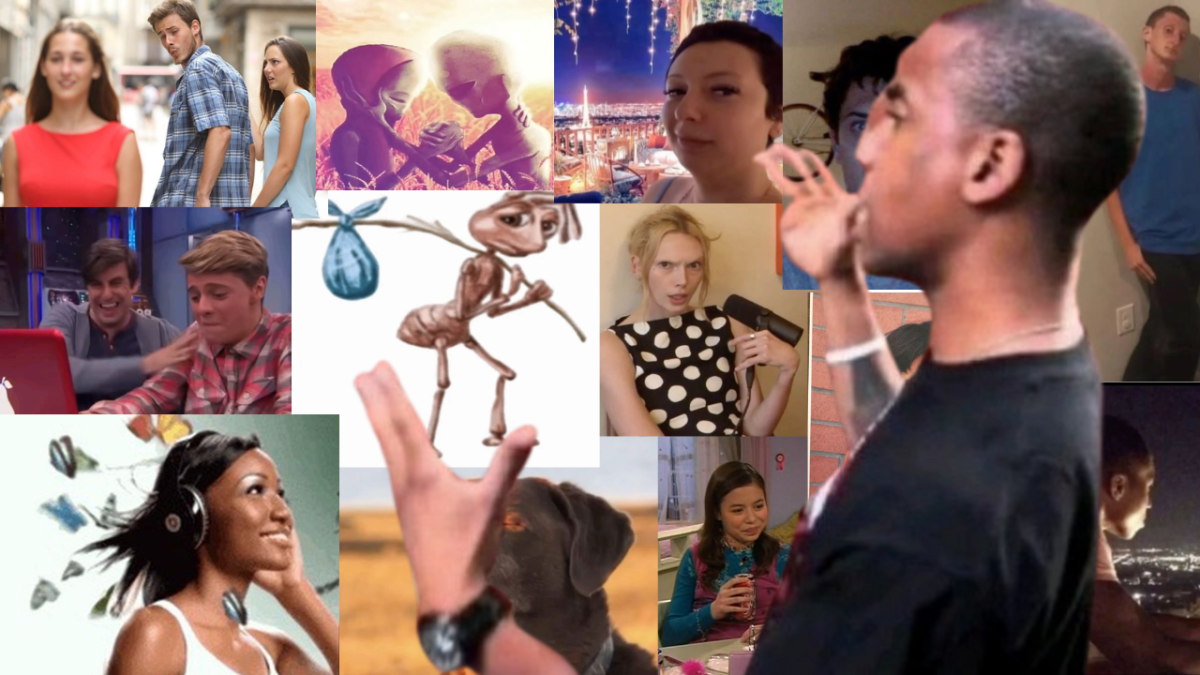
Ever since the birth of the internet, online jokes, otherwise known as memes, have been an integral part of online culture. From Vine to TikTok, internet memes have been a form of entertainment, self-expression, and connections to other people. Bigger corporations have taken notice of this and have started using it to their advantage. Today, the internet has become a fundamental part of how we communicate, market, and work. Internet memes are now difficult to avoid and are seen in advertisements and other marketing strategies to appeal to a younger audience.
For example, brands like Duolingo, a language-learning platform, film TikToks making jokes and references to market their app, while keeping younger viewers engaged and laughing. Even if you are not online, you cannot escape people around you making references to a viral TikTok video or a famous Vine.
Many teenagers today can be found making internet references as jokes in their daily conversations.
“[I make] multiple references per hour, I would say” Illiana Molina-Marquez ‘27 says while laughing. “Not to a crazy extent, but almost just like an inside joke with your friends. It’s something really niche that you reference, but it just makes you laugh”
New friendships can even from knowing the same video on TikTok with another person.
“I think that when you bond over something that maybe you’ve seen on Instagram or TikTok, it kind of makes you closer,” Poppy Leland ‘29 comments. “You have an inside joke.”
Maddy Manzo ‘26 agrees with Leland.
“Even when you crack a joke, and you reference something, and someone else catches it it’s like ‘Oh shoot, we’re on the same side of the internet’” Manzo adds. “The internet world is like a different place. Either people get it, or they don’t.”
However, not everyone understands internet references. Some people notice that they only feel comfortable making jokes around those whom they know will understand it.
“I feel like a lot of the internet references I make [are] around people that I already know, and that I’m already comfortable with,” Molina-Marquex remarks. “Especially in school.”
For some, memes or social media are their primary sources of news. According to PBS News data, 54% of teenagers get their news from sources like Facebook and YouTube. Certain accounts on TikTok or Instagram make it their goal to create headlines in the format of memes, allowing younger viewers to digest them more easily, or they create videos reacting to the news. From a Common Sense Media Survey, 64% of teenagers prefer seeing pictures or a video to help them understand what happened.
Through humor, people can connect jokes with more serious topics. They can advertise activism and societal issues as well. A significant reason why internet memes are still alive and thriving today is that they are able to keep audiences engaged through mixing both humor and meaningful content.
Today, memes are more prominent than ever. Social media apps spread new jokes faster and make it easier for people to view them and laugh. Memes have shaped some people’s humor today, making it easier and a lot more fun when you find a new person who knows exactly what you’re referring to.
“And in part, I feel…I’m a little brainrotted. But I think I’m more funny. I can pick up on things faster, because I have this encyclopedia of memes and jokes,” Manzo states. “You just have to be able to reference stuff, and I feel like that’s what the internet teaches you.”